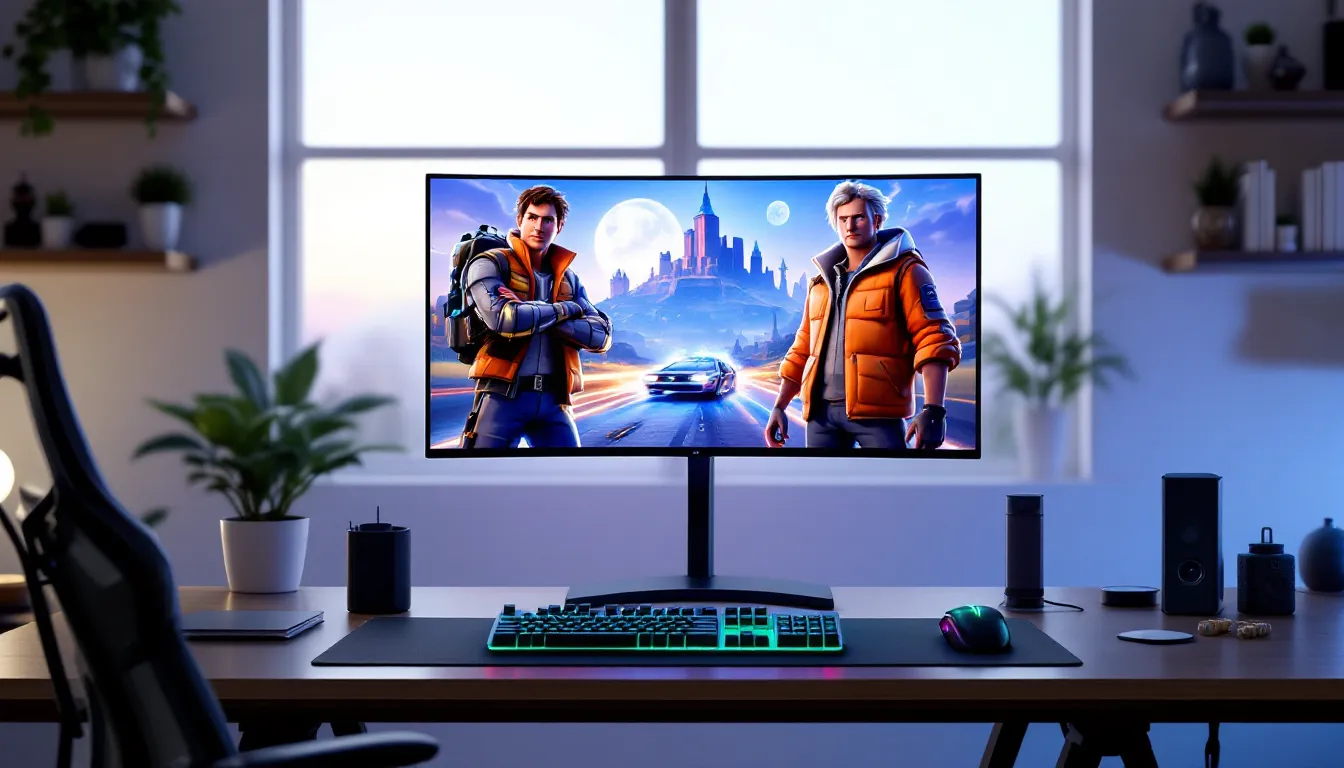
When Epic Games announced they were bringing Doc Brown and Marty McFly to the island, the gaming and movie worlds collided in one of the most nostalgic crossovers Fortnite has ever pulled off. The Back to the Future collaboration dropped into Fortnite with all the fanfare you’d expect for a franchise that defined time-travel cinema in the ’80s, complete with a drivable DeLorean, iconic character skins, and Easter eggs that’ll make any fan grin.
Whether you’re hunting down every cosmetic, trying to get your hands on the legendary time machine vehicle, or just curious what Hill Valley looks like in battle royale form, this guide covers everything. From skin bundles and pricing to hidden map changes and gameplay tips, here’s your complete rundown of the Back to the Future Fortnite event.
Table of Contents
ToggleKey Takeaways
- The Back to the Future Fortnite crossover launched on October 11, 2023, featuring iconic character skins of Marty McFly and Doc Brown, a drivable DeLorean vehicle, and Hill Valley-themed map changes that delivered authentic fan service.
- The DeLorean Time Machine functioned as a fully drivable vehicle with unique speed-boost mechanics, gullwing doors, and thematic audio design that replicated elements from the films, making it ideal for rotations across the map.
- Back to the Future cosmetics were available through bundled pricing (2,800 V-Bucks for the complete set) or individual purchases, with special limited-time quests awarding free rewards like loading screens and sprays to engaged players.
- The event emphasized high-quality cosmetic design and nostalgic Easter eggs, including interactive landmarks, hidden references, and sound cues, positioning it among Fortnite’s most well-executed crossovers in terms of attention to detail.
- This collaboration reinforced Fortnite’s role as a cultural platform, introducing classic 1980s IP to new generations while providing multigenerational appeal that drove engagement and Item Shop sales.
- Players who prioritized the bundle purchase and landed near Hill Valley landmarks were able to maximize quest completion and cosmetic value during the limited two-week event window.
What Is the Back to the Future Fortnite Collaboration?
The Back to the Future Fortnite crossover brought two of the most recognizable characters from the 1985 film trilogy, Marty McFly and Doc Brown, into the game alongside the DeLorean Time Machine. Epic Games partnered with Universal Pictures to recreate key elements from the franchise, integrating them into Fortnite’s existing mechanics while staying true to the film’s aesthetic.
This wasn’t just a skin drop. The collaboration included drivable vehicles, themed cosmetics, limited-time quests, and map changes that paid homage to Hill Valley and the movie’s most memorable moments. It joined the ranks of other major pop culture events like Marvel, Star Wars, and Rick and Morty, but stood out for its nostalgia factor and attention to detail.
When Did the Crossover Event Launch?
The Back to the Future event officially launched on October 11, 2023, timed perfectly around the date Marty McFly travels to in Back to the Future Part II. Epic Games has a history of timing crossovers with culturally relevant dates, and this one hit the mark.
The event ran for approximately two weeks, with skins and items available in the Item Shop during that window. While some cosmetics have returned in periodic rotations since then, the initial launch featured the full suite of content, including exclusive challenges that rewarded free items to players who completed specific objectives.
How Epic Games Brought Hill Valley to Battle Royale
Epic didn’t just slap a couple of skins into the game and call it a day. They introduced themed map changes, including landmarks that referenced Hill Valley’s clock tower and other iconic locations from the films. The DeLorean itself became a fully functional vehicle with unique mechanics, more on that later, that players could drive across the island.
Sound design played a big role too. The DeLorean featured audio cues pulled straight from the movies, including the familiar hum of the flux capacitor and that unmistakable rev when it hit 88 mph (in-game, anyway). These details elevated the crossover from a simple cosmetic event to an immersive experience that actually felt like stepping into the Back to the Future universe.
All Back to the Future Skins and Cosmetics Available
Epic Games went all-in on the cosmetic lineup for this event. The collaboration included two character outfits, a glider based on the DeLorean, multiple back bling options, emotes, wraps, and a pickaxe that doubled as a callback to the films. Here’s the full breakdown.
Marty McFly and Doc Brown Character Skins
Marty McFly came with his classic 1985 look: orange puffer vest, denim jacket, red-and-white sneakers, and that unmistakable hair. The skin also included a built-in emote where Marty adjusts his vest and checks his watch, a subtle nod to his constant time-checking throughout the trilogy.
Doc Brown featured his wild white hair, lab coat, and goggles. Epic nailed the character model, capturing Christopher Lloyd’s manic energy in digital form. Doc’s built-in emote had him pulling out a gadget and tinkering with it, complete with sparks flying.
Both skins came with alternate styles. Marty had a “Future” variant inspired by his 2015 outfit from Part II, complete with auto-lacing sneakers and a color-shifting cap. Doc’s alternate style swapped his lab coat for the Wild West duster he wore in Part III.
DeLorean Time Machine Glider and Pickaxe
The DeLorean Time Machine Glider was the standout cosmetic. When deployed, it featured glowing trails and the iconic Y-shaped tire marks as you descended. The glider also played a snippet of the Back to the Future theme, which is either awesome or slightly annoying depending on how many times you drop in a session.
The pickaxe, called Sayonara Sucker, was modeled after the hoverboard Marty uses in Part II. It had a pink-and-green color scheme with a glossy finish, and the swing animation made it look like you were smacking objects with the edge of the board. Not the most practical harvesting tool thematically, but it looked slick.
Exclusive Back Bling, Emotes, and Wraps
Back Bling options included the Flux Capacitor Back Bling, which glowed and pulsed with energy as you moved. It was animated, reactive to eliminations, and one of the better-designed back accessories Epic has released.
Emotes were a mix of references and original animations. The Time Traveling Emote had your character disappear in a flash of light with the DeLorean’s signature tire marks left behind. Another emote, Hoverboard Jam, let your character ride a hoverboard in place while grooving to music.
Wraps included the Time Circuits Wrap, which covered weapons and vehicles in the DeLorean’s dashboard design, complete with red LED-style dates. It’s a deep cut for fans who appreciate the details.
How to Get Back to the Future Items in Fortnite
Getting your hands on the Back to the Future gear required either opening your wallet or grinding through event-specific challenges. Here’s how the distribution worked.
Item Shop Bundles and Pricing
Most of the collaboration content was sold through the Item Shop in bundles. The Back to the Future Bundle included both Marty and Doc skins, the DeLorean Glider, pickaxe, back bling, and wraps for 2,800 V-Bucks (roughly $22 USD if you bought V-Bucks at standard pricing).
Individual items were also available:
- Marty McFly Skin: 1,500 V-Bucks
- Doc Brown Skin: 1,500 V-Bucks
- DeLorean Glider: 1,200 V-Bucks
- Pickaxe and Back Bling: 800 V-Bucks each
- Emotes: 300-500 V-Bucks depending on rarity
The bundle offered a discount compared to buying everything separately, which is standard for Fortnite crossovers. Items rotated in and out of the shop during the event window, and they’ve returned sporadically since the initial launch, usually around October or during nostalgia-themed shop rotations.
Special Challenges and Free Rewards
Epic also released a set of limited-time quests tied to the event. Completing these challenges earned players free cosmetics, including a Time Circuits Loading Screen and a Flux Capacitor Spray.
The quests themselves were straightforward: drive a certain distance in a DeLorean, visit specific Hill Valley-themed landmarks, and eliminate opponents while using Back to the Future cosmetics. Nothing too grindy, and most players could knock them out in a few matches.
These free rewards weren’t game-changing, but they gave players who didn’t want to spend money a way to participate in the event. Plus, Fortnite battle royale mechanics always benefit from limited-time objectives that shake up the usual grind.
The DeLorean Vehicle: Gameplay Mechanics and Features
The DeLorean wasn’t just a cosmetic glider, it was a fully functional vehicle you could drive around the map. Epic integrated it into Fortnite’s existing vehicle system, but gave it some unique traits that set it apart from standard cars.
How the Time Machine Works In-Game
The DeLorean handled like a faster, slightly more responsive version of Fortnite’s default cars. It seated up to four players (driver plus three passengers), and passengers could shoot out of it while moving, making it a solid option for squad rotations.
The standout feature was its speed boost mechanic. When you hit a certain velocity, the DeLorean’s wheels would ignite in the signature fire trails from the movies, and you’d get a brief acceleration burst. It wasn’t quite 88 mph, Fortnite doesn’t use real-world speed metrics, but it felt fast, and the visual effect was spot-on.
The vehicle also had decent durability compared to other cars. It could take a few hits before exploding, which made it viable for mid-game rotations even under fire. But, it didn’t have any offensive capabilities beyond running people over, so you still needed to bail and fight if ambushed.
One quirk: the DeLorean’s doors opened upward (gullwing style, obviously), which sometimes caused clipping issues if you parked too close to walls or objects. Not a dealbreaker, but it could get you stuck in tight spaces.
Spawn Locations and Tips for Finding the DeLorean
DeLoreans spawned at specific locations around the map, primarily near Hill Valley-themed landmarks and major POIs. During the event, they had a higher spawn rate than typical vehicles, but they weren’t guaranteed at every location.
Key spawn points included:
- Near the clock tower landmark (center-west of the map during Chapter 4 Season 4)
- Outside Mega City and other high-traffic named locations
- Random roadside spawns, similar to standard cars
If you were hunting for one specifically, landing near the Hill Valley area gave you the best odds. Otherwise, keeping an eye out while rotating usually turned one up.
Once the event ended, DeLoreans remained in the loot pool for a few weeks before being vaulted. They’ve returned occasionally during throwback events or when Back to the Future items rotate back into the shop, but they’re no longer a permanent fixture.
Back to the Future Map Changes and Easter Eggs
Epic didn’t overhaul the entire map for this crossover, but they sprinkled in enough details to make it feel like Hill Valley had invaded the Fortnite universe. If you knew where to look, you’d find callbacks to all three films.
Hill Valley POI and Landmark Additions
The biggest change was the addition of a Hill Valley-themed landmark, which featured a recreation of the town’s iconic clock tower. It wasn’t a full named location, more of an unnamed POI, but it had enough loot to justify landing there.
The clock tower itself was interactive. At certain times during matches, lightning would strike it (a reference to the climax of the first film), and players nearby could see the visual effect. It didn’t impact gameplay, but it was a nice touch.
Other small Hill Valley details popped up around the map: vintage storefronts, old-timey signage, and even a movie theater marquee advertising Back to the Future. These weren’t marked on the map, so stumbling across them felt like finding a secret.
Hidden References and Movie Callbacks
Epic hid Easter eggs throughout the event that only die-hard fans would catch. One of the best was a hoverboard spawn near the Hill Valley landmark, a static prop you couldn’t use, but it glowed pink just like Marty’s board in Part II.
Another callback: if you drove the DeLorean into water (say, off the coast or into a river), it would struggle and eventually explode, just like how the time machine couldn’t handle water in Part III. A small detail, but it showed Epic did their assignments.
Players also reported hearing faint audio cues from gaming culture references near certain locations, including snippets of the Back to the Future theme and Doc’s famous “Great Scott.” line. These were ambient and easy to miss if you had game volume low, but they added to the atmosphere.
Limited-Time Modes and Special Quests
Epic didn’t launch a dedicated LTM for the Back to the Future event, which surprised some players given how elaborate other crossovers (like Marvel’s Endgame mode) had been. Instead, they integrated the content into standard playlists and added themed challenges to keep players engaged.
The special quests were straightforward and tied to the collaboration. Objectives included:
- Drive a DeLorean for a cumulative 5,000 meters
- Visit the Hill Valley clock tower in three different matches
- Eliminate opponents while wearing Marty or Doc skins
- Deal damage to structures using the Sayonaka Sucker pickaxe
Rewards for completing the quest line included sprays, loading screens, and XP boosts. Nothing exclusive that you couldn’t live without, but enough incentive to engage with the event content.
One missed opportunity: fans speculated that Epic might introduce a time-travel mechanic, maybe rifts that sent you to different eras of the map or a mode where you raced DeLoreans against a clock. That never materialized, which left some players wanting more.
Still, the quests were accessible and didn’t require excessive grinding. Casual players could knock them out in a few sessions, and competitive players could ignore them without missing critical rewards. It was a balanced approach, even if it lacked the spectacle of a full LTM.
Epic has shown with Fortnite’s evolving trends that crossover events can vary wildly in scope. Some get full modes and map overhauls: others lean heavily on cosmetics and atmosphere. Back to the Future landed somewhere in the middle.
How the Crossover Compares to Other Fortnite Collaborations
Fortnite has hosted dozens of crossovers, from Marvel and DC to Ariana Grande concerts and Star Wars lightsaber events. So where does Back to the Future rank?
In terms of cosmetic quality, it’s up there with the best. The skins were accurate, the DeLorean glider was polished, and the attention to detail (reactive back bling, alternate styles, sound design) showed Epic treated the IP with respect. Compare that to some lazier crossovers where skins feel like rushed recolors, and Back to the Future stands out.
Gameplay-wise, it was less ambitious. The DeLorean vehicle was fun but not groundbreaking, it didn’t introduce new mechanics the way the Marvel web-slingers or Star Wars lightsabers did. The lack of a dedicated LTM also meant the event felt smaller than, say, the Avengers: Endgame crossover, which had a full PvE mode.
Where Back to the Future excelled was nostalgia and cultural relevance. The timing (launching on the date from Part II) was perfect, and the franchise has multigenerational appeal. Players who grew up with the films in the ’80s got to share the event with younger gamers discovering the movies for the first time. That kind of cross-generational hype is rare.
From a business perspective, esports outlets like Dexerto covered the event heavily, which speaks to its reach. It trended on social media, generated content creator buzz, and drove Item Shop sales, all metrics Epic cares about.
Why This Crossover Matters to Fortnite and Pop Culture
Crossovers like this reinforce Fortnite’s position as more than a game, it’s a cultural platform. When Epic can pull off collaborations with franchises spanning 40+ years (Back to the Future) to current anime hits (My Hero Academia), it shows the game’s versatility.
For Back to the Future specifically, it introduced the franchise to a generation that might not have watched the films. Younger players who mained Marty or drove the DeLorean were more likely to check out the movies afterward, which is exactly what Universal wanted. It’s a win-win: Epic gets content, the IP gets exposure, and players get fresh cosmetics.
Long-term, events like this keep Fortnite relevant. Battle royale mechanics can only carry a game so far: it’s the constant influx of new content, skins, vehicles, map changes, and yes, crossovers, that keeps the player base engaged between major updates.
Tips and Strategies for Maximizing Your Back to the Future Experience
If you’re diving into Fortnite specifically to experience the Back to the Future content (or if you’re a completionist hunting down every challenge), here are some tips to get the most out of the event.
Prioritize the Bundle if You’re Buying: If you plan to grab multiple items, the full bundle saves you V-Bucks compared to buying skins and cosmetics individually. Only go piecemeal if you’re 100% sure you only want, say, the Marty skin and nothing else.
Land Near Hill Valley for Quests: Most event challenges revolve around Hill Valley landmarks or driving the DeLorean. Dropping near the clock tower area lets you knock out multiple objectives in one match, visit the landmark, grab a DeLorean nearby, and start racking up distance.
Use the DeLorean for Rotations, Not Fights: The vehicle is fast and durable, but it’s not a combat monster. Use it to move between zones or escape the storm, then ditch it before engaging enemies. Staying in the car makes you an easy target for players with decent aim.
Check the Item Shop Daily: During the event window, Back to the Future items rotated in and out. If you missed something on day one, it likely returned before the event ended. Setting a daily reminder to check the shop ensured you didn’t miss limited-time offers.
Complete Challenges in Team Rumble: If you’re struggling with quest objectives (like eliminations while wearing specific skins), Team Rumble’s respawn mechanic makes it way easier. You can focus on objectives without worrying about getting sent back to the lobby every time you die.
Grab Screenshots and Clips: These events don’t last forever. If you’re into content creation or just want memories, grab some screenshots of your squad rolling up in the DeLorean or standing in front of the clock tower. Epic tends to vault event content after it ends, so capturing it while it’s live is your best bet.
For players who care about long-term account value, limited-time collaboration skins often become “rare” after the event ends. While you can’t trade Fortnite cosmetics, having skins from major crossovers like Back to the Future adds prestige to your locker. Gaming outlets covering guides and tips regularly rank collaboration skins among the most sought-after items in the game.
Conclusion
The Back to the Future Fortnite crossover hit the sweet spot between fanservice and gameplay integration. Epic delivered high-quality skins, a functional (and fun) vehicle, and enough map details and Easter eggs to satisfy both casual players and franchise diehards. It wasn’t the most mechanically ambitious crossover Fortnite’s ever done, but it nailed the atmosphere and nostalgia factor.
If you missed the event when it first launched, keep an eye on the Item Shop, Epic has a habit of bringing back popular collaboration items during themed rotations or anniversaries. And if you managed to snag the DeLorean glider or both character skins, you’re sitting on some of the cooler cosmetics Fortnite’s offered in recent years.
Whether you’re a longtime fan of the films or just someone who appreciates a well-executed crossover, the Back to the Future event proved once again that Fortnite’s strength lies in its ability to merge gaming with pop culture in ways that feel authentic and engaging.